
CBD Softgels vs. Capsules vs. Tablets: A Deep Dive into Absorption, Cost, and Shelf Life
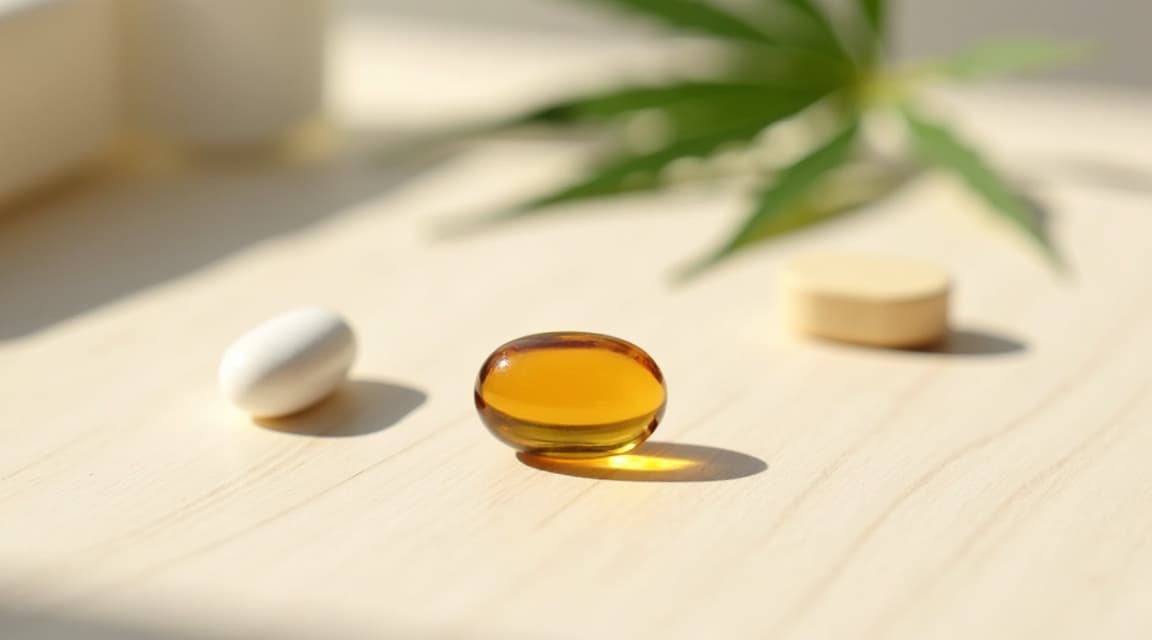
The Evolving Landscape of Oral CBD Delivery
In 2023, the global market for cannabidiol (CBD) continued its robust expansion, with oral formulations like softgels, capsules, and tablets representing a significant share of consumer preference, particularly in regions like the EU and North America. As consumers become more discerning, understanding the subtle yet crucial differences between these delivery methods is paramount for making informed choices about their wellness routines.
Beyond the simple act of ingestion, each form offers distinct advantages and disadvantages concerning how CBD is absorbed by the body, its overall cost-effectiveness, and its stability over time. This guide aims to demystify these options, providing a comprehensive overview for those navigating the diverse world of CBD products.
CBD Softgels: The Liquid Advantage
CBD softgels typically encapsulate CBD oil within a gelatin or plant-based shell, offering a pre-measured dose in a smooth, easy-to-swallow format. Their primary advantage often lies in their potential for enhanced bioavailability due to the CBD being pre-dissolved in a carrier oil, such as MCT oil, which can improve absorption in the digestive tract.
This liquid-filled design allows for a more consistent and potentially faster onset of effects compared to some other oral forms, as the body doesn't need to break down a solid material before absorption can begin. Many users appreciate the convenience and discretion offered by CBD softgels, making them a popular choice for daily supplementation.
CBD Capsules: Simplicity and Precision
CBD capsules, often referred to as hard-shell capsules, consist of a two-piece shell (typically gelatin or cellulose) filled with powdered CBD isolate, broad-spectrum, or full-spectrum hemp extract. These offer exceptional dose precision, as each capsule contains an exact, pre-measured amount of CBD, eliminating the need for droppers or measuring spoons.
For individuals sensitive to the earthy taste of CBD oils, capsules provide a taste-neutral alternative, making daily intake more palatable. While absorption might be slightly slower than softgels due to the need for the capsule shell to dissolve and the powder to disperse, they remain a highly reliable and straightforward option for consistent CBD intake.
CBD Tablets: The Lesser-Known Option
CBD tablets are less common in the consumer market compared to softgels and capsules but represent another oral delivery method. These are typically formed by compressing powdered CBD extract with various excipients (inactive ingredients) into a solid, often chewable or dissolvable, pill. Their manufacturing process allows for precise dosing and can sometimes incorporate additional ingredients for specific effects.
While tablets can offer similar advantages in terms of precise dosing and taste masking, their absorption profile can vary significantly depending on the formulation and the excipients used. Some specialized tablet forms, like sublingual tablets, are designed for absorption directly into the bloodstream through the oral mucosa, bypassing the digestive system entirely for potentially faster effects.
Understanding Bioavailability and Absorption
Bioavailability refers to the proportion of a drug or other substance that enters the circulation when introduced into the body and is able to have an active effect. For oral CBD products, bioavailability is crucial, as a significant portion of ingested CBD can be metabolized and eliminated before reaching the bloodstream, a phenomenon known as the first-pass effect.
Softgels, with their pre-dissolved CBD in carrier oils, are often formulated to enhance bioavailability by improving solubility and aiding lymphatic absorption, potentially leading to more CBD reaching systemic circulation. Capsules and tablets, depending on their formulation and the presence of absorption enhancers, can also offer effective delivery, though their exact bioavailability can vary widely across products and brands.
This article is for informational purposes only and is not medical advice. Consult a healthcare professional before starting CBD, especially if you take medication or have a medical condition.
Factors Influencing Absorption
Several factors beyond the product form itself influence how well CBD is absorbed. The presence of carrier oils, such as MCT oil or hemp seed oil, significantly impacts solubility and absorption by aiding the transport of lipophilic CBD molecules through the digestive system. The individual's metabolism, gut health, and even the presence of food in the stomach can also play a role.
Research is continuously exploring novel delivery systems, such as nanoemulsion technology, which breaks down CBD into tiny particles to further enhance its solubility and absorption. Such advancements are particularly relevant for oral forms, aiming to maximize the therapeutic potential by ensuring more CBD reaches its target sites within the body, as highlighted by a 2019 study in Frontiers in Pharmacology.
Cost Considerations: Price Per Milligram
When evaluating the cost-effectiveness of CBD softgels, capsules, and tablets, it's essential to look beyond the sticker price and calculate the price per milligram (mg) of CBD. Generally, highly processed or specialized formulations, like nanoemulsified softgels, might command a slightly higher price point due to the advanced technology involved in their production.
Standard capsules and tablets, especially those containing CBD isolate, can sometimes be more cost-effective on a per-milligram basis due to simpler manufacturing processes. However, premium full-spectrum extracts, regardless of the form, typically carry a higher price. Consumers looking for value should compare the total CBD content and price across different product types, perhaps starting their search at our general shop page.
Shelf Life and Stability
The shelf life of CBD products is a critical factor for both consumers and manufacturers, influencing product efficacy and safety over time. All three forms—softgels, capsules, and tablets—offer good stability compared to raw oils due to their protective outer layers which shield the CBD from environmental degradation factors like light, air, and moisture.
Softgels, with their hermetically sealed liquid contents, are particularly adept at protecting the CBD from oxidation. Hard-shell capsules and tablets also provide excellent protection, especially when stored in cool, dark places. Proper storage is key to maximizing the longevity of any wellness product, ensuring the CBD remains potent and effective throughout its stated shelf life.
Choosing Your Ideal Form: Practical Takeaways
The choice between CBD softgels, capsules, and tablets ultimately depends on individual preferences and priorities. If enhanced bioavailability, a potentially quicker onset, and ease of swallowing are paramount, softgels may be the preferred option. For those prioritizing precise dosing, taste neutrality, and straightforward daily routines, capsules offer an excellent solution.
Tablets, while less common, can be ideal for specific applications, such as sublingual absorption, or for those who prefer chewable options. Regardless of the form, always look for third-party lab testing to ensure product purity and potency, a practice supported by leading CBD research institutions.
Conclusion and FAQ
Navigating the array of CBD delivery methods can seem daunting, but understanding the fundamental differences in absorption, cost, and shelf life empowers you to make a choice that aligns with your wellness goals. Whether you opt for the liquid advantage of softgels, the precision of capsules, or the unique properties of tablets, consistent and informed usage is key.
For consumers in the EU, exploring options from reputable brands available in their region can be a good starting point, perhaps through a dedicated EU product search. Remember to always start with a low dose and gradually adjust to find what works best for your body.
Q: Are softgels always more bioavailable than capsules?
A: Not always, but often. Softgels typically contain CBD pre-dissolved in a carrier oil, which can enhance absorption. However, some advanced capsule or tablet formulations using technologies like nanoemulsion can achieve comparable or even superior bioavailability.
Q: Can I open a CBD capsule or softgel?
A: While you can technically open a hard-shell capsule to consume the powder, it's generally not recommended as it can affect dosage precision and taste. Opening a softgel is not advisable as it contains liquid and is designed for intact ingestion to optimize absorption.
Q: How long do the effects of oral CBD forms typically last?
A: The effects of oral CBD forms like softgels, capsules, and tablets typically last longer than sublingual oils or vapes, often ranging from 4 to 8 hours. The exact duration can vary based on individual metabolism, dosage, and the specific product formulation.

Will Clarkson is the founder and editor-in-chief of cbdproducts.pro, with a background in biomedical science and more than five years working hands-on in the CBD industry. He sets editorial standards across the site — including the product-testing methodology, citation requirements for health claims, third-party lab verification policy, and the medical-disclaimer framework applied to every guide. Will personally reviews all English-language flagship content, signs off on YMYL editorial policy, and coordinates the multilingual editorial team covering nine additional languages across the EU, USA, and Canada. Based in the UK, he has spoken at independent wellness-industry events on lab-testing transparency and affiliate-publishing ethics. Photo: /uploads/authors/will-clarkson.jpg.