
Flying with CBD in 2026: Complete EU, USA, and Schengen Travel Rules
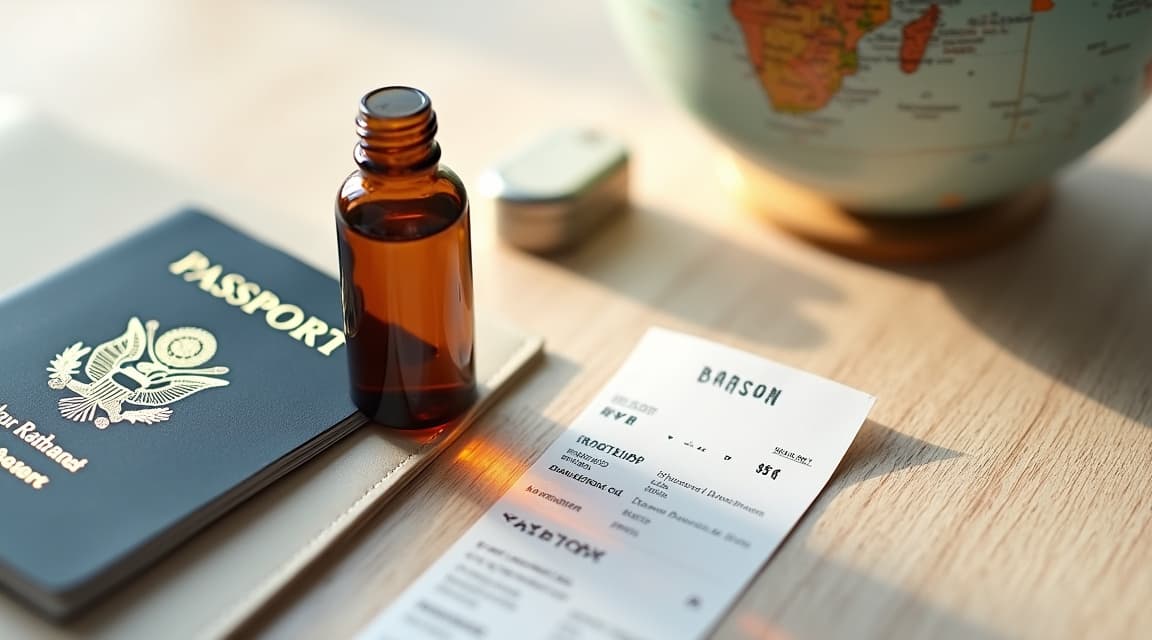
The Evolving Landscape of CBD Travel in 2026
As 2026 unfolds, the global landscape for CBD continues to mature, bringing both clarity and ongoing complexity for travelers. The increasing mainstream acceptance of hemp-derived products means more individuals are considering bringing their CBD along for domestic and international flights.
However, despite this growth, the legal nuances surrounding CBD's THC content and its classification across different jurisdictions remain a critical hurdle for uninformed passengers.
Understanding CBD: THC Content is Your Compass
The fundamental determinant for the legality of CBD products, especially when flying, is their Tetrahydrocannabinol (THC) content. In the United States, federally legal hemp-derived CBD must contain no more than 0.3% Delta-9 THC on a dry weight basis, a standard set by the 2018 Farm Bill.
Conversely, most of the European Union, including the Schengen Area, typically adheres to a stricter threshold of 0.2% THC. This subtle but significant difference is paramount for travelers to understand and verify before departure.
Navigating US Federal and State Regulations (2026 Perspective)
Under US federal law, hemp-derived CBD products meeting the 0.3% THC limit are generally permissible to transport across state lines and on domestic flights. This federal stance, however, does not entirely override individual state laws, some of which may have specific restrictions on certain CBD product types or forms.
While federal agencies like the TSA primarily focus on security threats, they defer to federal and state laws regarding cannabis products. Always ensure your chosen CBD oil or other product complies with both federal guidelines and the laws of your departure and arrival states.
The EU's Harmonized (and Not-So-Harmonized) Approach
Within the European Union, the general consensus for hemp-derived CBD products is a maximum THC content of 0.2%. However, the EU's 'novel food' classification for CBD extracts means that individual member states still retain significant autonomy in regulating their sale and consumption.
This can lead to variations; while some countries are more permissive, others may have stricter interpretations or require specific product registrations. Travelers originating from or heading to the EU should verify the specific regulations of their destination country, even if purchasing EU-compliant CBD.
Schengen Area Specifics: Seamless Travel, Specific Rules
The Schengen Area, comprising 27 European countries, allows for free movement across internal borders without routine passport checks. While this facilitates easy travel, it does not create a uniform legal framework for substances like CBD.
Each Schengen member state still applies its own national laws regarding CBD. Therefore, carrying CBD from one Schengen country to another requires adherence to the rules of both the departure and arrival nations, particularly concerning the 0.2% THC limit.
Practical Tips for Air Travel: Documentation is Your Best Friend
To ensure a smooth journey, comprehensive documentation for your CBD product is invaluable. Always carry the Certificate of Analysis (COA) from a third-party lab, which verifies the product's THC content and purity.
Keeping the CBD in its original, unopened packaging, along with any relevant purchase receipts or a doctor's recommendation (if applicable), can further support your claim that the product is legal and compliant. For deeper insights into product verification, explore CBD research institutions.
This article is for informational purposes only and is not medical advice. Consult a healthcare professional before starting CBD, especially if you take medication or have a medical condition.
Product Forms and Airport Security Checks
When passing through airport security, the form of your CBD product matters. Liquids, including CBD oils and tinctures, must adhere to the TSA's 3-1-1 rule for carry-on luggage (containers 3.4 ounces/100 milliliters or less, placed in a 1-quart-sized bag).
CBD edibles, capsules, and topicals are generally less scrutinized, but all products should be clearly labeled and their THC content verifiable. Full-spectrum products, even within legal limits, are often preferred over broad-spectrum or isolate forms by users seeking the entourage effect, as noted in a 2019 study in Frontiers in Pharmacology exploring cannabis compounds.
International Flights and Customs: Beyond EU/USA
Traveling internationally with CBD beyond the EU or USA introduces an entirely new layer of complexity. Many countries outside these regions maintain zero-tolerance policies for any cannabis-derived products, regardless of THC content.
Even transiting through an airport in a country with strict laws can lead to severe legal consequences. Always conduct thorough research on the specific laws of every country on your itinerary, including layovers, to avoid potential issues. For more travel-related insights, visit our travel archive.
Final Checklist for a Smooth Journey
Before heading to the airport, double-check your CBD product's THC content against the legal limits of your destination and transit countries. Ensure all necessary documentation, like COAs and original packaging, is readily accessible.
When in doubt, consider leaving your CBD at home or purchasing it legally at your destination. A proactive approach to understanding and adhering to regulations is the best way to ensure a stress-free travel experience with your CBD. You can always browse our shop for compliant products.
FAQ
Q: Can I bring CBD gummies on a flight?
A: Yes, generally, if they comply with the THC limits of your departure and arrival locations (0.3% in the USA, 0.2% in most of the EU). Gummies are solid, so they are not subject to liquid restrictions. Always carry the product's Certificate of Analysis.
Q: What's the main difference between EU and USA CBD travel rules?
A: The primary difference lies in the maximum permissible THC content: 0.3% Delta-9 THC for hemp-derived CBD in the USA (federally), versus a stricter 0.2% THC limit in most EU member states. Always verify state-specific laws within the USA and national laws within the EU.
Q: What documentation should I carry for my CBD?
A: You should carry a third-party Certificate of Analysis (COA) for your product, verifying its THC content. Keeping the product in its original packaging with clear labeling is also highly recommended, and a doctor's note might be helpful, though not always legally required.

Will Clarkson is the founder and editor-in-chief of cbdproducts.pro, with a background in biomedical science and more than five years working hands-on in the CBD industry. He sets editorial standards across the site — including the product-testing methodology, citation requirements for health claims, third-party lab verification policy, and the medical-disclaimer framework applied to every guide. Will personally reviews all English-language flagship content, signs off on YMYL editorial policy, and coordinates the multilingual editorial team covering nine additional languages across the EU, USA, and Canada. Based in the UK, he has spoken at independent wellness-industry events on lab-testing transparency and affiliate-publishing ethics. Photo: /uploads/authors/will-clarkson.jpg.