
How to Read a CBD Certificate of Analysis in Five Minutes
The Indispensable Role of the Certificate of Analysis
In 2023, the European Monitoring Centre for Drugs and Drug Addiction (EMCDDA) highlighted a significant expansion of the CBD market across member states, underscoring the critical need for consumer diligence amidst varying product quality and regulatory landscapes. This rapid growth, while offering wider access to a diverse array of cannabinoid products, also presents a unique challenge: how can consumers confidently verify the contents and integrity of what they are purchasing in a largely unregulated or inconsistently regulated space?
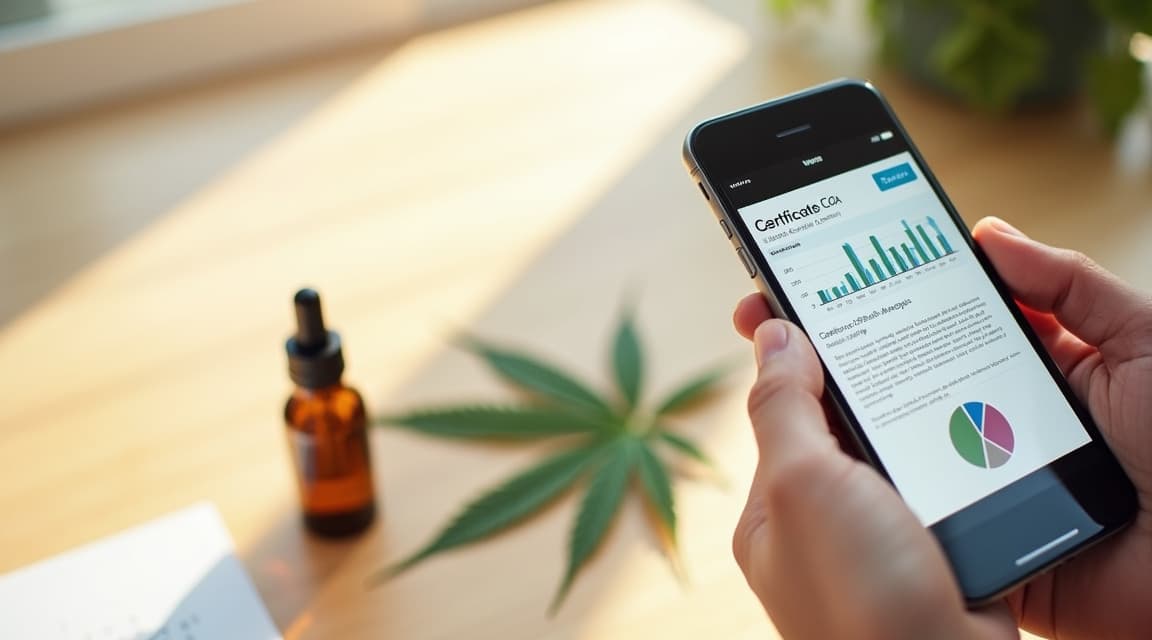
The answer lies in the Certificate of Analysis, or COA, a vital document that serves as a product's transparent laboratory report card, meticulously detailing its chemical composition and purity. It is the cornerstone of trust in an evolving industry, providing a scientific snapshot of a product's cannabinoid profile, potency, and the absence of harmful contaminants. Understanding how to quickly decipher a COA is no longer just for industry insiders; it's an essential skill for any discerning buyer seeking quality CBD oils or other products.
What Exactly is a Certificate of Analysis (COA)?
A Certificate of Analysis (COA) is a document issued by an accredited, independent third-party laboratory that confirms a CBD product's contents, verifying the claims made by the manufacturer. It acts as an unbiased, scientific validation, providing transparency regarding cannabinoid concentrations, ensuring the product is free from harmful substances, and confirming its legal compliance.
Essentially, a COA is your guarantee that what's advertised on the label is precisely what's inside the bottle, capsule, or gummy. It’s a critical tool for consumer protection, bridging the gap between marketing claims and scientific reality, thereby fostering trust in an industry where standards can vary significantly across different manufacturers and regions.
Step 1: Locate the COA and Verify the Lab
The first step in reading a COA is simply finding it. Reputable CBD brands prominently display their COAs, often accessible via a QR code on the product packaging, a batch number lookup on their website, or directly linked on the product page itself. If a brand makes it difficult to find a COA, consider it a significant red flag.
Once you have the COA, immediately check the name of the testing laboratory. It should be an independent, third-party facility, not affiliated with the CBD brand itself, and ideally ISO 17025 accredited, which signifies competence in testing and calibration. Also, verify that the batch number on the COA matches the batch number on your product, ensuring you're looking at the correct report for your specific item.
Step 2: Examine the Cannabinoid Profile and Potency
This section is perhaps the most crucial part of the COA, detailing the exact concentrations of various cannabinoids present in the product. You'll typically find percentages and milligrams (mg) per serving or per total container for compounds like CBD (cannabidiol), CBG (cannabigerol), CBN (cannabinol), and potentially others, depending on whether it's a full-spectrum, broad-spectrum, or isolate product.
Compare these reported values directly with the product's label claims. For instance, if you purchased a 1000mg CBD gummy product, the COA should confirm approximately 1000mg of CBD (or very close to it, allowing for slight natural variations) within the entire container. This verification ensures you are receiving the advertised potency and value for your investment, aligning product expectations with scientific measurement.
Step 3: Confirm THC Content for Legal Compliance
For many consumers, especially those in regions with strict regulations, verifying the THC (tetrahydrocannabinol) content is paramount. The COA will clearly state the percentage of Δ9-THC, the primary psychoactive compound in cannabis. Under US federal law, hemp-derived CBD products must contain less than 0.3% Δ9-THC by dry weight, while in many EU member states, this limit is often 0.2%.
Ensure that the reported THC level falls within these legal thresholds for your specific jurisdiction. This step is vital not only for legal compliance but also for peace of mind, especially for individuals concerned about psychoactive effects or those subject to drug testing. A clear 'ND' (Non-Detect) for THC indicates a CBD isolate or broad-spectrum product where THC is below the detectable limit.
Step 4: Check for Contaminants and Impurities
Beyond cannabinoid profiles, a comprehensive COA will include testing for potential contaminants, which is critical for product safety. These tests typically cover heavy metals (e.g., lead, mercury, arsenic), pesticides (residues from agricultural practices), residual solvents (from the extraction process), and microbial impurities (bacteria, mold, yeast).
Look for results indicating 'Pass' or 'ND' (Non-Detect) for all these categories, signifying that the product is clean and safe for consumption. The absence of these harmful substances is a non-negotiable aspect of product quality, directly impacting consumer health and well-being. Always prioritize products that demonstrate rigorous testing in this area, as it reflects a manufacturer's commitment to safety and quality control.
This article is for informational purposes only and is not medical advice. Consult a healthcare professional before starting CBD, especially if you take medication or have a medical condition.
Step 5: Understand Terpene Profiles and Other Compounds
While not always present on every COA, especially for isolates, a full-spectrum product's COA may include a terpene profile. Terpenes are aromatic compounds found in hemp that contribute to its distinctive scent and flavor, and are also believed to interact synergistically with cannabinoids, a phenomenon often referred to as the 'entourage effect.' A 2019 review published in Pharmaceuticals highlights the potential for these compounds to modulate cannabinoid effects.
Beyond terpenes, some COAs might also list other minor cannabinoids or flavonoids. While not strictly necessary for a five-minute read, understanding these additional compounds can offer deeper insights into the product's holistic profile and potential benefits, such as those explored by various CBD research institutions.
Step 6: Verify Dates and Reporting Standards
Finally, always check the date the COA was issued. CBD products, like any natural product, can degrade over time, and an outdated COA might not accurately reflect the current state of the product. Look for a COA issued within the last 6-12 months to ensure its relevance and accuracy, reflecting the product's current batch.
Also, pay attention to the reporting standards and units used. Most reputable labs will use clear, consistent units (e.g., mg/mL, % by weight) and provide detection limits for contaminants. A well-presented COA with clear data and an official lab signature indicates professionalism and reliability, guiding consumers toward trustworthy CBD brands.
Practical Takeaways for Confident CBD Shopping
Mastering the art of reading a CBD COA in five minutes empowers you to be a more informed and confident consumer. By quickly checking the lab's credentials, matching batch numbers, verifying cannabinoid potency, ensuring legal THC limits, and confirming the absence of contaminants, you gain a powerful tool for navigating the complex CBD market. This diligence not only protects your investment but, more importantly, safeguards your health by ensuring product purity and efficacy.
Remember, transparency is key in the CBD industry. Brands that readily provide comprehensive and up-to-date COAs are generally those committed to quality and consumer trust. Make the COA your essential checklist before any CBD purchase, transforming a potentially confusing document into a clear indicator of product integrity and empowering your health and wellness journey.
FAQ
Q: What if a CBD product doesn't have a COA?
A: If a CBD product lacks an easily accessible Certificate of Analysis, it is strongly advisable to avoid purchasing it. The absence of a COA is a significant red flag, indicating a lack of transparency and potentially compromised product quality or safety. Reputable manufacturers always provide this documentation.
Q: How much variation is acceptable between the label and the COA?
A: While some minor variation (typically within 10-15%) between the label claim and the COA results for cannabinoid potency is generally considered acceptable due to natural plant variations and testing tolerances, significant discrepancies should raise concerns. For THC, however, there should be no deviation above the legal limit.
Q: Can I trust all third-party labs listed on a COA?
A: While the term 'third-party' implies independence, it's crucial to look for labs that are ISO 17025 accredited. This accreditation signifies that the lab meets international standards for technical competence and quality management systems, providing a higher level of assurance regarding the accuracy and reliability of their test results. Always prioritize accredited labs for your guides and education on CBD.

Will Clarkson is the founder and editor-in-chief of cbdproducts.pro, with a background in biomedical science and more than five years working hands-on in the CBD industry. He sets editorial standards across the site — including the product-testing methodology, citation requirements for health claims, third-party lab verification policy, and the medical-disclaimer framework applied to every guide. Will personally reviews all English-language flagship content, signs off on YMYL editorial policy, and coordinates the multilingual editorial team covering nine additional languages across the EU, USA, and Canada. Based in the UK, he has spoken at independent wellness-industry events on lab-testing transparency and affiliate-publishing ethics. Photo: /uploads/authors/will-clarkson.jpg.